
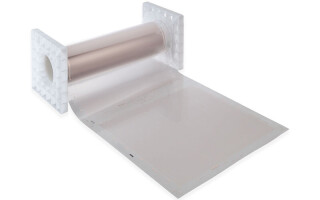
Panasonic Industry recently introduced a transparent conductive film called FineX FineCross) designed for EMI shielding in applications where optical clarity must be maintained. The film targets systems such as displays, industrial equipment interfaces, and wireless communication environments where both visibility and electromagnetic control are required.
Article Search
Industrial
Processing
embedded world 2026 Podcast with Tria Technologies - Podcast
March 23, 2026Editor Rich Nass interviews Alex Wood, Global Marketing Director, Tria Technologies, and Robert Thompson, Director Edge Processing Ecosystems, NXP, at embedded world 2026.
Tech News Roundup
ICYMI Ep54: embedded world, NVIDIA GTC, Robotics, & Physical AI - Video
March 20, 2026Hello Embedded Professionals, Engineers, and Developers! Welcome to In Case You Missed it, the weekly news show all about Embedded technologies and solutions from Embedded Computing Design.
Analog & Power
embedded world Recap, New oHFM Standard, & the Importance of Security - Podcast
March 19, 2026On this episode of Embedded Insiders, Editor-in-Chief Ken Briodagh sits down with Ansgar Hein, Chairman of the Board at SGET e.V., to discuss the new Open Harmonized FPGA Module (oHFM) standard, the world’s first open standard specifically designed for FPGA and SoC-FPGA modules.
Security
Embedded Executive: Once Again, You MUST Implement Security | Thistle Technologies - Podcast
March 18, 2026You’ve heard it over and over—you must incorporate security into your design. And in most cases, that’s happening today. But the task can still be somewhat daunting. That’s where a vendor like Thistle Technologies comes into play. They can make the integration far easier than you might have expected.
Hear why and how from the company’s Founder and CEO, Window Snyder, who has seen far more than most of us when it comes to security. Window was this week’s guest on the Embedded Executives podcast.
AI & Machine Learning
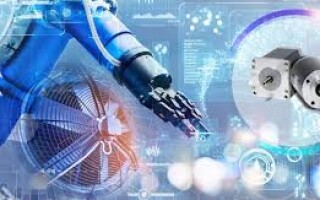
The Role of Motor Control in Physical AI - Blog
March 16, 2026Physical AI is a term that’s in vogue right now. It refers to the application of AI to systems that directly interact with and influence the physical world. Unlike Cloud-based AI models that analyze data and produce insights, physical AI closes the loop between perception, decision-making, and actuation. It senses its environment, processes that data locally or at the Edge, and then potentially drives such equipment as motors, valves, pumps, or actuators. In short, it turns algorithms into action.
Open Source
DevTalk with Rich and Vin: HMIs and LVGL - Podcast
March 03, 2026You need some sort of UI on your system. It may be quite elaborate, or it may be very simple. In either case, designing that UI should not be a barrier to entry for an embedded system. Enter LVGL, or Light and Versatile Graphics Library, an open-source embedded graphics library that aims to (and accomplishes) eliminating that barrier.
To understand why this is even an issue and how designers can get past it, Rich and Vin spoke to Gabor Kiss-Vamosi, the Founder and CEO of LVGL, on this episode of DevTalk with Rich and Vin.
Tech News Roundup
ICYMI Ep 51: Wincomm, Wireless, oHFM, and CRA - Video
February 27, 2026Hello Embedded Professionals, Engineers, and Developers! Welcome to In Case You Missed it, the weekly news show all about Embedded technologies and solutions from Embedded Computing Design.
Consumer
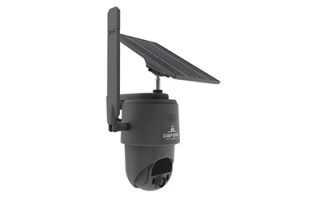
Protect Your Home from Thieves and Floods - Blog
February 25, 2026It’s always fun the weeks after CES, when some of the cooler the products you’ve seen on site in Las Vegas show up for real-life testing. This year, I took a look at two products, both wireless devices that are aimed at protecting the home.
Networking & 5G
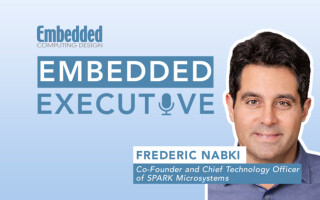
Embedded Executive: LE-UWB Touts Low Power Plus High Bandwidth | SPARK Microsystems - Podcast
February 18, 2026Bluetooth claims to own the low-power wireless space with its Low Energy (LE) flavor. A newer, yet older entrant in the space wants to claim that throne. That would be Low Energy UWB, or LE-UWB. And now you understand the reference to newer-older.