Create a Cost-Effective HMI With LVGL (and Some Help From Renesas)
January 26, 2026
Sponsored Blog
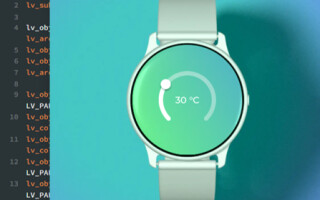
LVGL, or Light and Versatile Graphics Library, is an open-source graphics framework designed specifically for embedded systems with displays. It gives developers a complete toolkit for building modern graphical user interfaces (GUIs) or human-machine interfaces (HMIs), which could consist of everything from basic buttons and sliders to complex widgets, animations, and touch interactions.
One key aspect of LVGL is that it’s hardware-agnostic, meaning it can run on a wide range of MCUs and MPUs, independent of the display controller or underlying RTOS. One MCU that it does run efficiently with is Renesas’ RA series. More on that in a minute.
LVGL’s importance in creating HMIs lies in how it lowers the barrier to building rich, intuitive user experiences on resource-constrained devices. Traditionally, embedded HMIs required significant custom development, often resulting in static or dated interfaces. LVGL changes that equation by offering a flexible, well-maintained framework that balances performance, memory footprint, and visual quality. As embedded systems continue to add connectivity, intelligence, and user interaction, LVGL has become a practical way to deliver consumer-grade interfaces in industrial, medical, and IoT devices without reinventing the graphics stack each time.
Back to the Renesas RA family of MCUs, which lines up well with the needs of an effective graphics library, particularly one based on LVGL. The RA series offers a broad range of Cortex-M–based parts with ample SRAM, which is often the gating factor for embedded GUIs. Several RA devices also integrate LCD controllers, 2D graphics acceleration, and DMA capabilities that offload pixel movement and refresh tasks from the CPU.
Just as important, the RA ecosystem, through its Flexible Software Package (FSP), provides solid driver support and middleware integration, simplifying the process of bringing up displays and touch interfaces. The result is a platform that can support responsive, visually rich HMIs without pushing MCU resources to the breaking point.
While LVGL is often associated with MCUs, there are cases where more computing power is needed. In that case, enter the Renesas RZ series of MPUs. As interface complexity grows with higher-resolution displays, multi-touch, richer animations, or concurrent application workloads, the headroom provided by an MPU becomes valuable.
Need More Headroom—the RZ MPU
The RZ family offers higher clock speeds, larger external memory support, and advanced graphics and video interfaces that can handle more demanding visual requirements. In these systems, LVGL can run on top of embedded Linux or a real-time OS, serving as the UI layer while the MPU manages networking, security, and application logic. This approach is well-suited for gateways, industrial panels, and edge devices where the HMI is a central feature rather than an add-on.
Raise the Bar Even Further
Going one step further, Renesas has teamed up with the LVGL project to make the LVGL Pro embedded UI editor more accessible to its customers. LVGL Pro isn’t just the open-source runtime library; rather, it’s a commercial, enterprise-grade UI design tool with features like real-time pixel-perfect preview, version control integration, Figma import, XML-based layouts, collaboration workflows, and CLI support for CI/CD.
To further simplify the purchase/development process, Renesas offers special LVGL Pro licenses to select customers at no extra cost. Hence, there’s no need to purchase Pro licenses separately. These licenses are paired with deep integration into Renesas tools and support for specific RA and RZ devices, helping development teams move from interface concept to implementation more efficiently without needing to negotiate separate commercial agreements for the editor.
For developers who want to learn more about this technology, Renesas has arranged for a webinar on the subject of designing cost-effective HMIs for embedded computers. The expert speakers will walk through the appropriate steps an HMI developer should take, while looking at the potential limitations. They’ll show how the various Renesas offerings dovetail with LVGL (and LVGL-Pro) and the company’s vast ecosystem to ease the effort and budget for creating rich HMIs.