Stay Competitive in Manufacturing with Customer Satisfaction
January 26, 2026
Blog
Over the last few years, the manufacturing industry has experienced a shifting landscape. Manufacturers across industries have faced supply chain challenges, fluctuations in demand, evolving buyer expectations, increasing labor shortages, and rising costs.
Despite these uncertainties, optimism in the sector remains with opportunities for U.S. manufacturers expected to increase in 2026. To combat some of the issues facing the industry, manufacturers are continuing to invest in emerging technologies. In fact, a recent survey from Deloitte found that 80 percent of manufacturing executives plan to invest 20 percent or more of their improvement budgets on smart manufacturing technologies such as automation hardware, data analytics, sensors, and cloud computing.
By investing in these technologies, manufacturers expect to remain competitive by improving production output, increasing employee productivity, and making room for new capacity. But in the current manufacturing landscape, a focus on the latest and greatest technologies isn’t enough on its own.
Focusing on the customer journey
Staying competitive in today’s manufacturing industry means retaining customers, winning new projects, and constantly evolving based on customer feedback. This begins with a deep understanding of customer challenges and restructuring operations to better deliver on customer needs.
When companies are deciding between manufacturers, their top considerations include cost, quality, speed, and the ability to scale production efficiently. On top of those factors, many companies have specific needs like precise product specifications, complex certification standards, and the need for customized manufacturing processes.
Manufacturers that understand these unique requirements and present themselves as a true partner will set themselves apart from the competition and be set up for success to win additional business now and in the future.
Meeting customer demands with intelligent solutions
Manufacturers who are customer-centric are also the ones embracing smart manufacturing technologies. Artificial intelligence (AI), automation, smart software solutions, and advanced manufacturing equipment bring a range of benefits that help manufacturers maintain and earn customer trust.
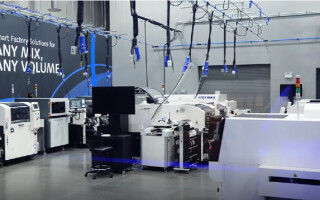
By integrating intelligent machines on the factory floor, manufacturers can increase speed, precision, and customization. Imagine an electronics manufacturer adds a new surface mount technology (SMT) machine to the factory floor that delivers a maximum speed of 104,000 components per hour (cph) and placement accuracy of ±25 µm. This level of speed and accuracy enables manufacturers to be more efficient and gives customers confidence that their products and their components are of the highest quality. Plus, with enhanced component versatility, one machine can support an array of component sizes, ensuring flexibility for diverse manufacturing needs that come with unique specifications.
On the factory floor, AI is integrated into machines to help predict when maintenance might be needed, ultimately reducing downtime and preventing operational slowdowns. This ensures that manufacturers are able to consistently meet production quotas and keep customers happy. AI is also a key part of software solutions like manufacturing execution systems (MES) that enable manufacturers to have a full view of the end-to-end manufacturing process. With the ability to easily access real-time information from all parts of the factory floor, manufacturers can seamlessly track and trace their goods from raw materials to the end-user product. This level of traceability and transparency is extremely valuable for customers that have high sustainability standards or strict regulatory requirements.
Partnering locally to improve relationships
As the global supply chain remains complicated for the foreseeable future, companies are turning toward local manufacturing support and inventory. This creates a more resilient supply chain that brings companies cost savings and allows them to maintain better control of their finished products.
By partnering with local or regional partners, companies also experience more responsive service teams and real-time training and application support. This includes quicker access to expertise if questions or problems arise, eliminating the need for international calls or planned travel that never aligns with exactly the time more support is needed. A local partnership also means teams can participate in in-person application demos and technical support training to ensure customer expectations are consistently met and integrated into daily operations.
Maintaining customer trust in 2026 and beyond
While the future remains uncertain for manufacturers, it’s clear that serving and supporting customers will continue to be paramount. A key part of this lies in integrating technologies that deliver faster, more personalized, and higher-quality experiences. Manufacturers that prioritize customer feedback, deliver value, and evolve with their changing needs will maintain customer trust and be at an advantage as we look to 2026 and the years to come

Dynamic and results-driven Operations Leader with extensive experience in optimizing technology operations, driving process improvements, and leading cross-functional teams to achieve organizational goals. Skilled in strategic planning, operational efficiency, and risk management, with a proven ability to align technology initiatives with business objectives. Adept at implementing scalable solutions, enhancing service delivery, and fostering a culture of continuous improvement.