Beyond the Lab: Why Voice AI Must Be Benchmarked Under Real-World Conditions
July 15, 2026
Blog
The following excerpts from a recent webinar hosted by Treble Technologies and Hugging Face.
Voice AI has reached an inflection point. Automatic speech recognition (ASR) systems now routinely achieve impressive results on established benchmarks, leading some to suggest that speech recognition is becoming a solved problem. Yet anyone who has attempted to deploy voice interfaces in conference rooms, vehicles, factories, public spaces, healthcare settings, or smart homes knows a different reality: speech recognition performance often deteriorates rapidly once systems leave controlled environments and enter the real world.
The challenge is not speech itself. It is acoustics.
As voice AI expands into meeting assistants, robots, automotive systems, smart devices, and multimodal agents, the industry increasingly faces a gap between benchmark performance and deployment performance. Recognizing this challenge, Treble and Hugging Face recently launched the Far-Field ASR (FF ASR) Leaderboard (add link), a new benchmark designed specifically to evaluate speech recognition systems under realistic acoustic conditions.
The initiative reflects a growing consensus across the speech AI community: if we want better voice AI, we need better ways to measure it.
The Hidden Challenge of Far-Field Speech
Traditional speech recognition benchmarks largely focus on what researchers call "near-field" audio—speech recorded close to a microphone, often through headsets, smartphones, podcasts, or call-center recordings.
According to Hugging Face audio ML engineer Eric Bézot, these datasets have been instrumental in driving progress over the past decade. However, they do not adequately capture the conditions encountered in many modern applications.
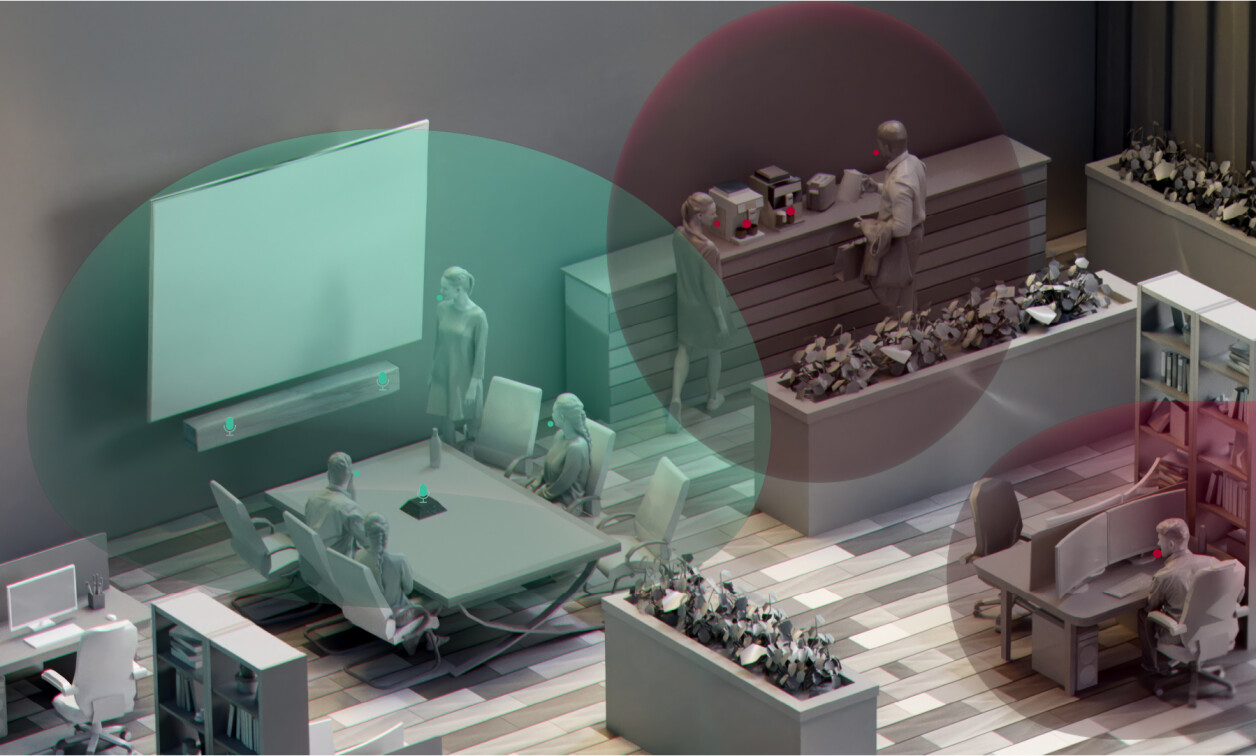
Far-field speech refers to situations where speakers are typically one meter or more away from the microphone. Examples include:
- Conference room meetings
- Smart speakers and appliances
- Automotive voice assistants
- Service robots
- Wearable devices
- Public and industrial environments
In these settings, speech must compete with reverberation, environmental noise, competing speakers, and movement. As distance from the microphone increases, signal quality decreases while unwanted acoustic interference increases.
The result is a significantly more difficult recognition problem.
IBM Research's George Saon illustrated this challenge using the AMI meeting transcription benchmark. Comparing identical speech recorded with close-talking microphones versus distant microphones, word error rates increased by factors of approximately 2.5 to 4 times depending on the model.
In other words, many systems that perform exceptionally well in clean conditions can struggle when faced with realistic acoustic environments.
Why Existing Benchmarks Are No Longer Enough
The reality is that current benchmarks provide an incomplete picture of real-world ASR performance.
Julian Mack of Cohere noted that many near-field benchmarks are becoming increasingly saturated. The leading models often perform similarly on clean speech datasets, making it difficult to distinguish meaningful differences in robustness.
However, once those same models are exposed to far-field conditions, significant performance gaps emerge.
This observation aligns with what many enterprises experience in deployment. Meeting transcription systems, for example, must often process audio captured through microphone arrays that perform beamforming, echo cancellation, and automatic mixing before speech reaches the recognition model. These preprocessing pipelines introduce additional variability that is rarely represented in conventional benchmarks.
Similarly, NVIDIA researcher Nathan Kallagori notes the growing importance of evaluating speech systems for emerging applications such as robotics, autonomous agents, and conversational AI operating in uncontrolled environments. These systems must function reliably despite background noise, reverberation, speaker movement, and varying microphone configurations.
Without benchmarks that reflect these realities, developers risk optimizing models for conditions that users rarely encounter.
Synthetic Data as a Scalable Solution
One of the most compelling aspects of the FF ASR Leaderboard is its reliance on acoustic simulation.
Collecting real-world speech data across thousands of room types, microphone placements, noise conditions, and speaker positions would be prohibitively expensive and difficult to scale. Yet these variables fundamentally determine how voice systems perform in practice.
Acoustic simulation offers a powerful alternative.
The benchmark begins with clean speech recorded in an anechoic chamber. This speech is then transformed into realistic far-field recordings using Treble's acoustic simulation technology. By modeling how sound propagates through furnished rooms and combining it with measured environmental noise, researchers can generate large-scale datasets representing a wide range of realistic scenarios.
The benchmark includes:
- Multiple room types, including homes, offices, classrooms, and meeting rooms
- High, medium, and low signal-to-noise conditions
- Static and moving speakers
- Varying source-to-microphone distances
- Line-of-sight and obstructed acoustic paths
Importantly, the simulations are not simplistic approximations. Using a digital audio twin approach such as that from Treble, high-fidelity wave-based acoustic simulations closely match measurements collected in physical environments, helping validate the realism of the synthetic data.
This capability addresses one of the long-standing challenges in speech AI: generating sufficient diversity in training and evaluation conditions without requiring prohibitively large real-world recording campaigns.
Simulation Is Not Just for Evaluation
It is becoming clear that synthetic data is already a cornerstone of modern speech recognition development.
Bézot described how many state-of-the-art systems improve robustness through data augmentation. Clean speech is transformed using room impulse responses, reverberation modeling, and added noise to create realistic training examples. These augmented datasets help models learn to cope with acoustic variability before deployment.
The practice has become increasingly important as speech interfaces move into environments where collecting exhaustive real-world data is impractical.
At NVIDIA, robustness is addressed through both architecture and data. Kallagori explained that model design choices can help reduce hallucinations and improve resilience under noisy conditions, but large-scale, diverse training data remains equally important.
The FF ASR Leaderboard extends this philosophy from training into evaluation. Rather than measuring performance only on clean speech, it systematically assesses how well models generalize to the environments where users actually interact with them.
Real-World Use Cases Reveal the Stakes
The webinar provided numerous examples illustrating why realistic benchmarking matters.
Saon described IBM's work with McDonald's on automated drive-through ordering systems. These deployments had to contend with vehicle noise, overlapping speech, cross-talk from neighboring lanes, accents, and multilingual interactions.
He also highlighted work with Australia's Royal Flying Doctor Service, where clinicians dictated notes inside small aircraft under extreme engine noise. These scenarios are far removed from the pristine audio found in many benchmark datasets, yet they represent genuine operational requirements.
Similarly, researchers at Carnegie Mellon University have spent years studying speech recognition in complex conversational environments. Shinji Watanabe pointed to challenges involving multiple speakers, overlapping dialogue, reverberation, and background noise—conditions that more closely resemble everyday human communication.
As conversational AI continues evolving, systems will increasingly need to understand not just isolated speech, but dynamic, multi-speaker interactions occurring in realistic acoustic spaces.
The FF ASR Leaderboard as a Community Resource
Perhaps the most important contribution of the FF ASR Leaderboard is that it provides a standardized framework for measuring these challenges.
Rather than evaluating only speech models, the benchmark is designed to accommodate entire speech processing pipelines. Researchers can submit standalone ASR models, denoising front ends, or combined systems. The platform also supports custom evaluation scripts, encouraging experimentation with preprocessing techniques and novel architectures.
The benchmark further includes measured and simulated datasets that help quantify the simulation-to-reality gap, an important step toward building confidence in synthetic evaluation methodologies.
The leaderboard is an important contribution to the broader speech community. Saon called it a step in the right direction for realistic benchmarking. Mack emphasized that it exposes areas where substantial progress is still needed. Watanabe noted its potential to support future research into conversational speech understanding, while Kallagori highlighted its role in shaping the next generation of voice-enabled agents and robots.
Measuring What Matters
The history of AI has repeatedly shown that benchmarks shape innovation. Researchers optimize for what is measured.
For speech recognition, the next frontier is no longer achieving marginal gains on clean audio datasets. It is delivering reliable performance in the environments where people actually live, work, and communicate.
Far-field speech recognition remains a difficult problem but the FF ASR Leaderboard represents an important evolution in how the industry can evaluate progress. By combining high-fidelity acoustic simulation, synthetic data generation, and standardized benchmarking, it provides a more realistic view of voice AI performance and a clearer path toward building systems that succeed beyond the lab.
As voice interfaces become foundational components of intelligent devices, robotics, and conversational agents, the ability to benchmark performance under real-world conditions may ultimately prove just as important as the models themselves.

Dr. Finnur Pind is founder and CEO of Treble Technologies. He holds a PhD and a master's degree in acoustical engineering from DTU – Technical University of Denmark. His career includes extensive experience in acoustics, applied mathematics, and software engineering.