
GaN Gains Ground with Embedded Use Cases
July 15, 2026
Blog
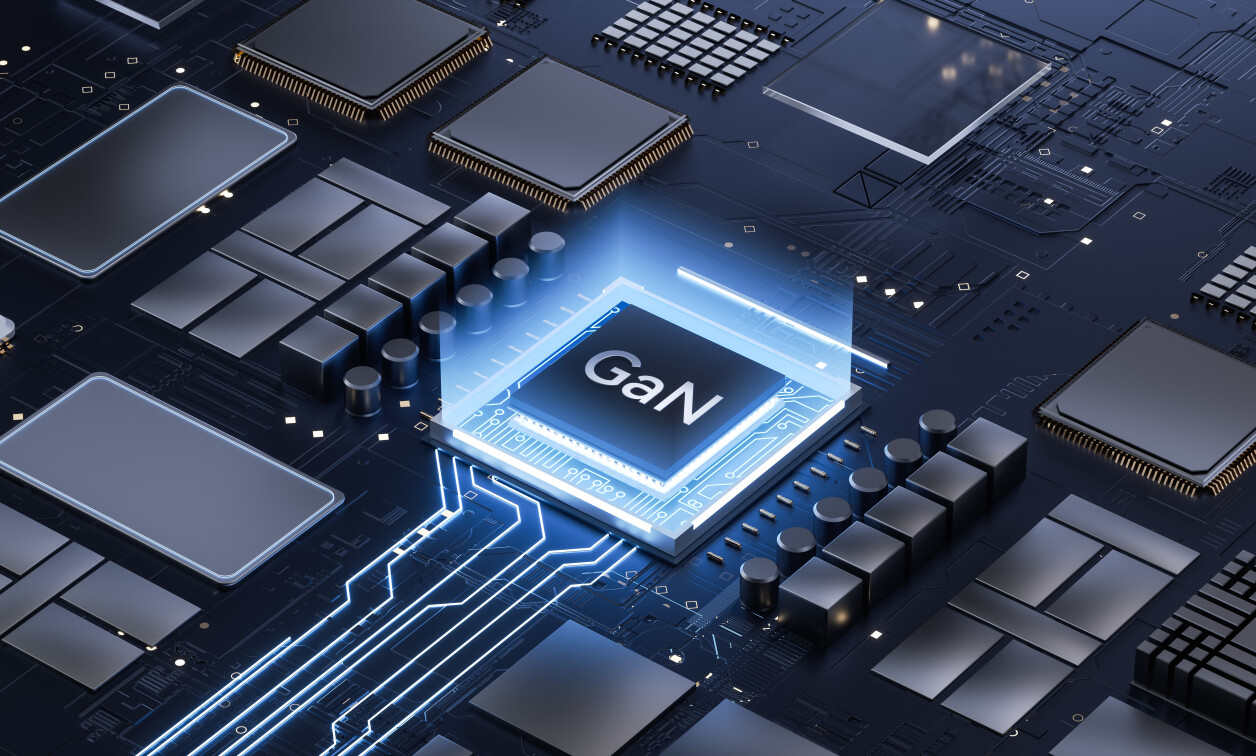
The demand for energy is growing at an ever-accelerating rate. As data centers begin to come online with increasing frequency, this problem is only going to increase, and AI demand is sure not slowing down yet.
One way that many companies are finding to address this problem is through the use of wide-bandgap semiconductor materials like gallium nitride (GaN) and, in higher voltage situations, silicon carbide (SiC). These materials are able to make energy use more efficient by reducing energy loss in transmission by cutting losses in switching and conversions.
These advantages are becoming better known and are seeing implementations in every vertical, and at scale, so let’s take a look at a few examples.
Navitas has been exploring and implementing GaN for some time now. The company uses lateral 650 V eMode GaN-on-Silicon technology in its AllGaN process design kit (PDK), which the company asserts can enable monolithic integration of GaN FET and GaN drive, plus logic and protection functions. Navitas then packages the die into low-inductance, low-cost, 5×6 or 6×8 mm QFN packages for off-line AC or 400 V DC-input applications. Using this process, the company produces its GaNFast power ICs.
These GaNFast building blocks are in use already in many implementations, including in power electronics to convert from one voltage or current to another, such as what needs to be done to change 110AC wall power to 20VDC for charging a laptop battery. The efficiency and flexibility of GaN means that the applicable markets are broad, ranging from fast chargers for smartphones or other personal devices to data center power supplies, solar inverters, and EV charging stations. Navitas partners with Dell, Lenovo, Xiaomi, Amazon, and many other tier-1 companies to provide GaN chips.
From ST, the story is not too different. The company makes STPOWER GaN Transistors that it says offer better figure-of-merit (FOM), on-resistance (RDS(on)), and total gate charge (QG) than silicon counterparts, with zero (or negligible in the case of cascaded devices) reverse recovery charge. ST is seeing its GaN transistors in use in smart chargers and adapters, LED lighting, game consoles, energy generation and distribution systems, power supplies and converters, and large home appliances.
ST GaN is particularly present in the world of alternative energy generation and distribution. The company says that the very high electron mobility of GaN materials is a critical piece of the puzzle for the design of next-generation power systems, especially those for electric vehicles and renewable energy applications.
Infineon is a major player in the GaN market, providing transistors in voltage ranges from 60 V to 700 V with its CoolGaN line. The company works with a robust partner ecosystem that spans every market and is in constant demand for more power, higher efficiency, and size reduction. Infineon transistors are present in consumer devices, data center power supplies, AI power, robotics, solar and energy storage, and vehicles.
On the consumer devices side, the company’s bidirectional switches (BDS) in the medium voltage (MV) range provide compact and reliable solutions for USB-C port protection, SMPS hot swap, and smart Battery Management Systems (BMS) in smartphones, notebook PCs, handheld gaming consoles and power banks, Infineon says. For industrial, the GaN use cases seem unlimited. In particular, the rise of sophisticated robotics is spurring the power electronics components space to innovate. Infineon says GaN solutions offer benefits in terms of size, efficiency, and performance for robotic applications like LiDAR sensing systems, motor controllers, and battery management systems.
This is only a short list of some of the major players in GaN right now and how they’re putting this new and powerful material technology to use. Perhaps it is time to start looking at your products and how they are managing power efficiency and decide if you’re ready to get GaN.

Ken Briodagh is a writer and editor with two decades of experience under his belt. He is in love with technology and if he had his druthers, he would beta test everything from shoe phones to flying cars.
At Embedded Computing Design, he covers, AI, Edge Computing, Data Centers, Automotive, Industrial, Smart City, IoT and IIoT, Semiconductors, Healthcare, and lots more. He hosts weekly programs on YouTube, including the technology unboxing feature DevKit Weekly, and his news show ICYMI, and, along with Tiera Oliver, hosts the Embedded Insiders and Embedded Executive podcasts.
In previous lives, he’s been a short order cook, telemarketer, medical supply technician, mover of the bodies at a funeral home, pirate, poet, partial alliterist, parent, partner and pretender to various thrones. Most of his exploits are either exaggerated or blatantly false.
Muck Rack: https://muckrack.com/ken-briodagh
Industry Moderator: https://www.microelectronicsus.com/speakers/ken-briodagh-1
Apple Podcasts: https://podcasts.apple.com/us/podcast/embedded-insiders/id1359230366
Spotify: https://open.spotify.com/show/5X07QpW7U2CM9ZbGxl4p40