How Embedded Intelligence Is Accelerating the Next Generation of Industrial Robotics
June 18, 2026
Sponsored Blog
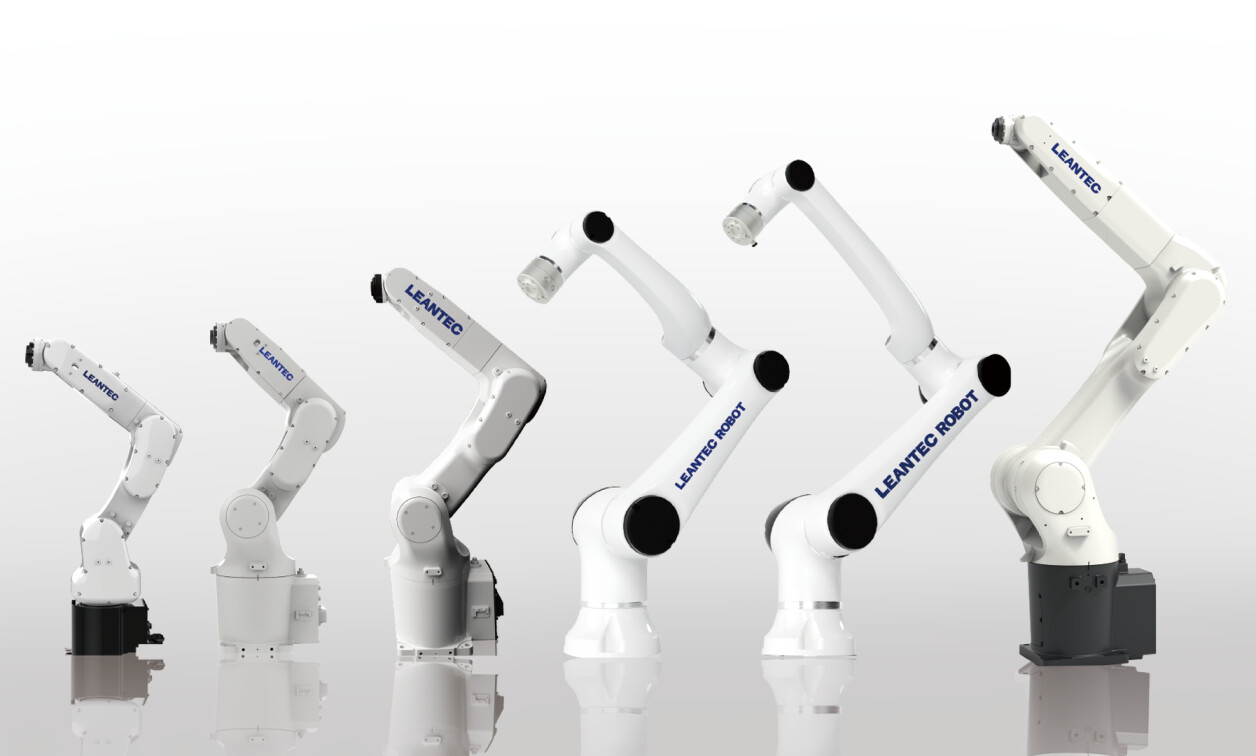
Industrial robotics is becoming smarter, more adaptable, and easier to deploy thanks to advances in embedded intelligence, machine vision, motion control, and connected automation systems.
As manufacturers seek greater productivity and flexibility, robotics systems are being designed with increased autonomy and adaptability. At the heart of this transformation is embedded intelligence—increasingly powered by AI—the integration of computing power, sensing, control, and communication technologies directly into robotic platforms and supporting automation equipment.
Modern robotic systems must process data in real time, make decisions at the edge, and coordinate seamlessly with other machines and factory systems. Increasingly, intelligence is moving closer to the machine itself. By combining edge computing with AI-driven perception, robotic systems can perform vision processing, motion planning, and operational decision-making at the edge, reducing latency, improving responsiveness, and adapting more effectively to changing production requirements.
Another important shift is the growing convergence of computing, sensing, and motion control within a single automation architecture. Rather than treating vision systems, controllers, and actuators as separate technologies, manufacturers are increasingly integrating these functions to simplify deployment, improve responsiveness, and support more adaptive production environments. AI further powers integration through real-time analytics, optimization and adaptive control This approach can help reduce system complexity while enabling greater flexibility on the factory floor.
Many of these advancements are being driven by technology innovators recognized by Taiwan Excellence, an awards program that highlights products demonstrating exceptional innovation, quality, design, and value. Selected through a rigorous evaluation process based on research and development, design, quality, and marketing performance, the Taiwan Excellence award recognizes outstanding products and solutions that reflect Taiwan’s industrial innovation strengths across multiple sectors. Among them are Techman Robot, Syntec, and TECO, each contributing critical technologies throughout the robotics ecosystem.
Collaborative robotics is one area where embedded intelligence is having a significant impact. Unlike traditional industrial robots, collaborative robots—or cobots—are designed to work safely alongside human operators, making automation more accessible to a broader range of manufacturers.
Techman Robot, a Taiwan-based developer of collaborative robots with integrated machine vision capabilities, combines vision and robotic control in a unified architecture that helps reduce system integration complexity while supporting inspection, object localization, pick-and-place operations, and adaptive assembly workflows.
As robots become more capable, the demands placed on motion control systems continue to increase. Precision, synchronization, and real-time responsiveness are critical for ensuring accuracy and reliability across industrial applications.
Syntec, a provider of CNC control, motion control, robotics, and smart manufacturing solutions, helps manufacturers synchronize multiple axes, integrate robotic systems with CNC equipment, and support increasingly complex machine coordination requirements while maintaining precision and repeatability.
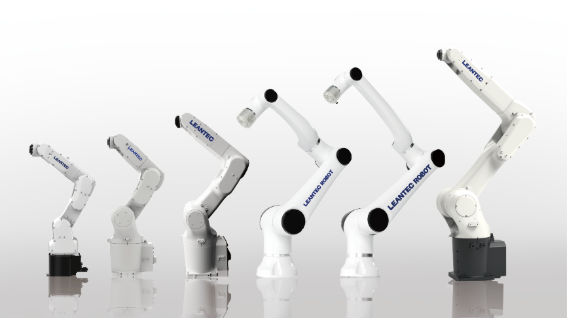
(Image Caption: SYNTEC- Industrial robotic arms and vision applications H Series)
Intelligent software and control systems must ultimately translate into physical motion. Motors, drives, and power systems remain fundamental building blocks within modern robotic architectures.
TECO, a global industrial technology company with longstanding expertise in motors, drives, and automation systems, is increasingly focused on intelligent motion platforms for robotics and autonomous systems. By integrating motion control, sensing, and actuation technologies into more compact architectures, the company contributes to a critical layer of the modern automation stack while helping manufacturers optimize both performance and energy efficiency.
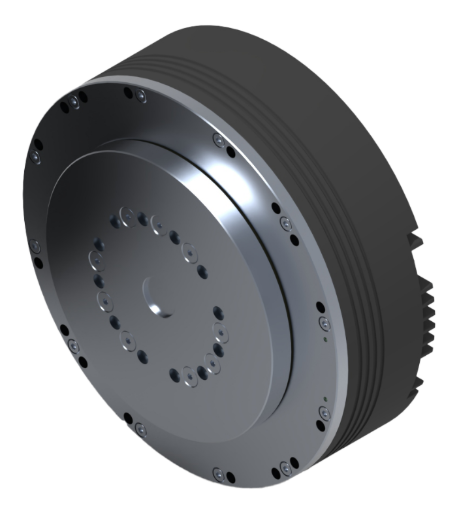
(Image Credit: TECO-Bionic Robot Joint Motor Module)
The convergence of embedded computing, AI, machine vision, advanced motion technologies, and intelligent automation platforms continues to reshape industrial robotics. As these technologies become more integrated, manufacturers will have greater opportunities to deploy automation systems that are not only more capable, but also easier to scale and adapt over time.
Taiwan's leadership in semiconductors, electronics, automation, and precision manufacturing provides a strong foundation for innovations that are advancing industrial robotics worldwide. Companies recognized by Taiwan Excellence—including Techman Robot, Syntec, and TECO—are helping drive this evolution through innovations spanning robotic intelligence, control systems, and motion technologies.
For engineers, system designers, and manufacturers evaluating the next generation of automation solutions, Automate 2026 (June 22–25 in Chicago, IL) provides an opportunity to explore these technologies firsthand. The Taiwan Excellence Pavilion, organized by the Taiwan International Trade Administration (TITA) and the Taiwan External Trade Development Council (TAITRA), will feature 23 companies showcasing how embedded intelligence, advanced control, and efficient motion systems are helping manufacturers build smarter, more capable robotic solutions.
To learn more about the Taiwan Excellence Pavilion and participating Taiwan Excellence companies, visit taiwanexcellence.us or stop by Booth #441 at Automate 2026.