Innatera’s Pulsar Delivers Brain-Inspired Computing to Power-Constrained Edge AI Devices
January 29, 2026
Story

The demand for always-on Edge AI workloads is not going away. With the need for continuous processing creating a constant challenge, many system designers must compromise between responsiveness, accuracy, and battery life. To solve this challenge, Innatera has developed Pulsar, a brain-inspired solution enabling pattern recognition that alters how sensor data is processed.
Pulsar Neuromorphic Microcontroller
Over seven years and six generations of silicon, Innatera designed Pulsar as a new approach to Edge AI computing by mimicking the brain’s pattern recognition structures. Pulsar is a neuromorphic microcontroller permitting continuous sensor data processing in power-constrained environments.
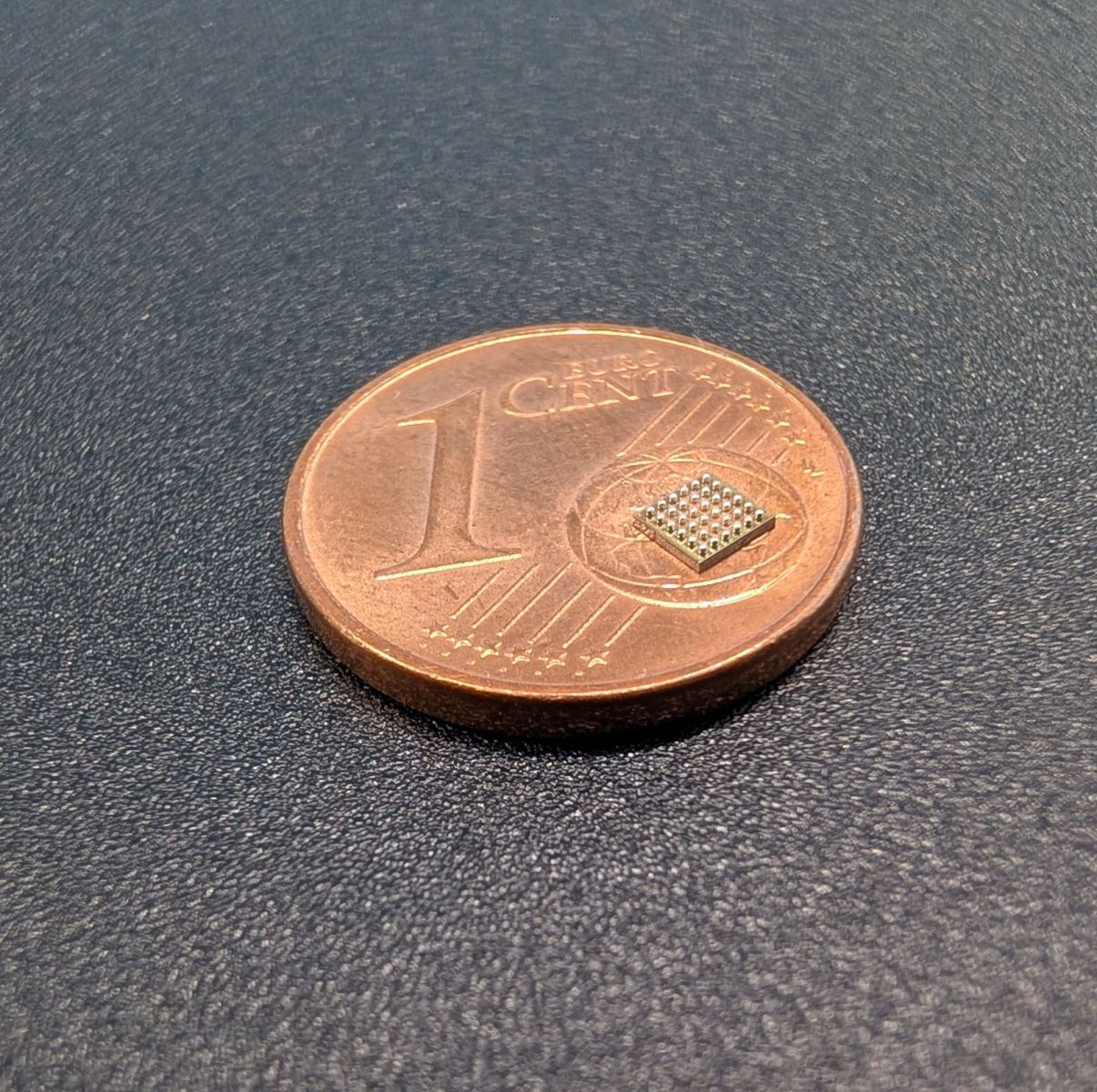 According to Sumeet Kumar, co-founder and CEO of Innatera, it reduces energy consumption by around 500 times and processes at speeds 100 times faster compared to conventional approaches, all within a petite chip (2.8x 2.6 mm). The chip utilizes a new heterogeneous computing architecture and operates spiking neural networks (SNN) encoding information into the timing of discrete events (spikes) rather than continuously extracting 64 bits of data. This makes the AI models about 100 times smaller than generalized AI models.
Pulsar Architecture and Capabilities
The Pulsar chip is considered a microcontroller and not just an AI accelerator. It integrates three separate computing fabrics:
- Brain-inspired fabric with various energy-efficient silicon neurons and synapses for parallel processing
- Conventional deep neural network accelerator for conventional AI workloads
- RISC-V CPU subsystem for system management
Broad sensor compatibility is engineered into Pulsar to support devices such as low-resolution cameras, radar sensors, microphones, and inertial measurement units. This is important for applications including consumer electronics (audio recognition), IoT/smart home (robust human presence sensing without a camera), industrial anomaly detection, and wearable devices.
Software Development Kit (TAMO)
TAMO is integrated with PyTorch enabling engineers with a standard machine learning framework and a turnkey tool chain to map models onto the chips without knowledge of the chip’s inner workings.
The pairing of Pulsar and TAMO overcomes conventional trade-offs by combining high accuracy, complex application support, and ultra-low power performance, enabling a streamlined development process without requiring neuromorphic chip expertise.
Technology in Use
During Computex 2025, Joya, a consumer electronics leader, sought out Innatera for its energy efficient processing capabilities to accelerate the deployment of neuromorphic-powered consumer electronics. Kumar said the goal is to better integrate AI at the edge while overcoming the challenges of bringing this technology to mainstream consumer devices.
Kumar discussed a solution that can accurately detect human presence using a radar sensor connected to Pulsar. The device can differentiate between humans and non-humans such as pets or moving bushes for far less false alarms on doorbell cameras. When integrated into doorbells, the battery life has been extended from three months to 18 months as the processor and camera are off until the sensor has detected a human, even by miniscule movements including heartbeats.
By mimicking how brains interact with environmental stimuli, Innatera has begun to re-shape how sensors collect and store information. Its Pulsar technology allows for complete devices without the need to defer from functionality, performance, and responsiveness due to battery constraints.

Chad Cox is the Production Editor at Embedded Computing Design. His responsibilities are centered around content creation, writing and editing, and article research and development. Chad covers industry news and events and is known to interact with various industrial leaders via on-premise visits and online interviews. He is responsible for the digital footprint and dissemination of news via social media posts, advertising creation and the production of newsletters including the Embedded Computing Design’s Daily.
He is well versed in many facets of industrial computing including Edge AI, IoT, Processing, Security, Open Source, and more.
Chad graduated from the University of Cincinnati with a B.A. in Cultural and Analytical Literature and holds a master’s in education.