Empowering Next-Gen Edge AI with MiTAC Platforms Based on Intel’s Arrow Lake-S
August 12, 2025
Sponsored Story
To keep pace with the surging demands of modern automation and digital transformation, manufacturers now demand edge AI platforms that are not just powerful but intelligent, rugged, and scalable by design.
At the core of this shift is the need to process vast amounts of data closer to the source—on the factory floor—where latency, reliability, and decision speed are critical, and AI is being used as an invaluable tool. This is also known as the Edge of the IoT, and is particularly present in applications like smart factories and warehouse automation.
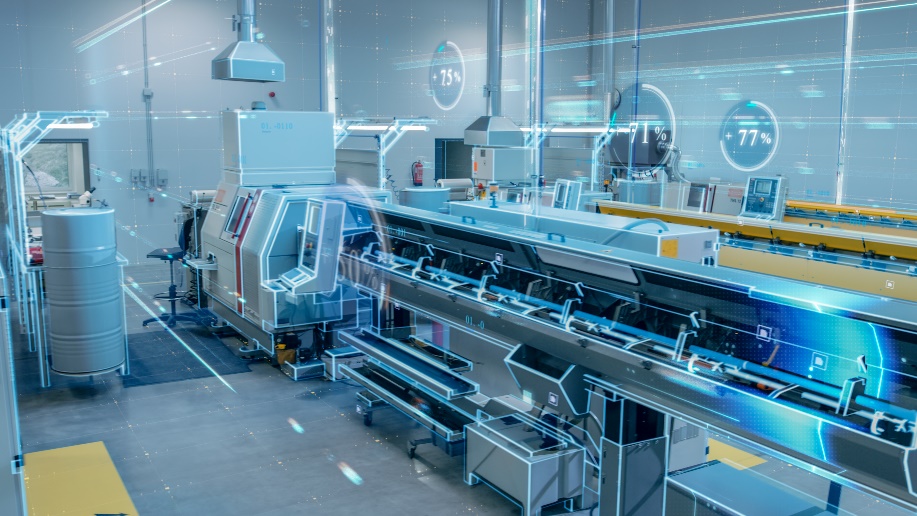

Real-time vision processing, for example, is essential for applications like defect detection, robotic guidance, and quality assurance, where milliseconds can determine success or failure. These tasks demand high-performance processors that are capable of handling complex image analysis with minimal delay. AI model inferencing at the Edge enables intelligent decision-making without relying on Cloud connectivity, which not only reduces latency but also enhances data privacy and operational uptime.
In addition, Edge analytics workloads are becoming more sophisticated, allowing manufacturers to monitor machine health, predict failures, and optimize production processes in real time. At the same time, predictive maintenance has become a common tool in the developers’ arsenal.
Scalability is equally important, as industrial operations vary in size and complexity, requiring platforms that can be adapted across different sites and applications. And reliability is non-negotiable in these applications, as system failures can result in costly downtime and safety risks. Embedded computing platforms that combine performance, ruggedness, and flexibility enable manufacturers to implement next-generation industrial use cases while maintaining operational efficiency and meeting the rigorous demands of the factory environment. They serve as the operational backbone of Industry 4.0, where milliseconds matter and intelligence at the edge is non-negotiable.
The Drivers of Modern Embedded Platforms
Today’s envelope-pushing modern embedded computing platforms must integrate several key elements to deliver the performance, reliability, and scalability required by the latest Edge-based industrial applications. At the heart is a high-performance multicore CPU, often paired with a GPU, NPU, or FPGA to accelerate parallel tasks like AI inferencing and vision processing. Real-time operating systems (RTOSs) or deterministic software layers are critical for time-sensitive operations.
These platforms also require robust I/O capabilities to support a variety of industrial protocols and peripherals. Ruggedized design is essential, ensuring operation in harsh environments with wide temperature ranges, shock, and vibration.
For scalability, modular architectures and support for containerization or virtualization allow the same hardware base to run multiple workloads or scale across deployments. Security features such as secure boot, hardware root of trust, and TPM integration protect against cyber threats. Together, these elements form a flexible and future-ready foundation for demanding Edge and industrial applications.
AI Ups the Performance Envelope
AI is becoming a central component of Edge-based embedded computing platforms for industrial IoT applications, transforming how data is processed and acted upon in real time. By embedding AI capabilities directly into the Edge embedded computer, manufacturers can analyze sensor, vision, and machine data locally, without relying on constant Cloud connectivity. This enables intelligent features like anomaly detection, predictive maintenance, and autonomous control at the source, significantly reducing latency and enabling faster, more accurate decisions.
AI at the Edge supports more efficient production lines, improved quality control, and reduced unplanned downtime. Embedded platforms equipped with AI accelerators, such as GPUs or NPUs, are capable of running sophisticated machine learning models while still meeting power and size constraints typical in industrial environments. This localized intelligence also enhances data privacy and operational reliability. As industrial systems evolve, AI at the Edge empowers manufacturers to implement smart, adaptive processes that align with the goals of Industry 4.0. That helps future-proof the investment made by the manufacturer.
The Developer’s Options
Developers have a wide range of options when it comes to Edge AI embedded computing platforms, depending on performance needs, environmental constraints, and specific industrial use cases. At the hardware level, choices include single-board computers (SBCs), system-on-modules (SoMs), and ruggedized industrial PCs, all of which can integrate CPUs with dedicated AI accelerators such as GPUs, NPUs, or FPGAs for local inferencing. Most popular platforms, including those based on Intel Arrow Lake-S, are supported by robust software stacks, including AI SDKs, containerization tools, and RTOSs for deterministic performance.
Developers can also leverage frameworks such as TensorFlow Lite, ONNX, and OpenVINO for model deployment and optimization at the Edge. Platforms often support Linux-based environments or RTOSs, depending on the application’s time-sensitivity. For scalability and connectivity, many solutions offer modular I/O, industrial protocol support, and secure Cloud integration, enabling tailored deployments across a variety of Edge scenarios.
What’s Inside the Edge AI Embedded Computer
Edge AI embedded computing platforms for industrial applications differ significantly from mainstream or traditional embedded computers in several key areas to meet the performance, reliability, and longevity demands of harsh, data-intensive environments. They include:
- CPU: Industrial Edge AI platforms typically feature more powerful, multi-core CPUs combined with AI accelerators like GPUs, NPUs, or FPGAs to handle machine learning workloads locally. Embedded computers based on Intel Arrow Lake-S CPUs are particularly suited for this application. In contrast, traditional embedded systems often rely on lower-power processors optimized for control tasks rather than inference.
- Memory: Edge AI platforms require larger amounts of RAM and storage capacities to accommodate the AI models, real-time data processing, and buffering, while traditional systems may operate with minimal memory due to simpler applications.
- Wireless: Industrial systems support robust, often redundant wireless options such as Wi-Fi 6, 5G, or private LTE for reliable, low-latency communication in complex, connected environments, aspects that are not always prioritized in conventional platforms.
- HMI: Advanced platforms offer high-resolution HMIs with GPU support for rich visualizations, compared to basic or static interfaces in traditional systems.
- Expansion: Industrial AI platforms feature extensive I/O, including PCIe, M.2, and mini-PCIe slots, to support specialized sensors, vision systems, and industrial protocols. This is clearly beyond the limited general-purpose I/O of mainstream devices.
- Future-proofing: Industrial Edge AI platforms are designed with long-term availability, upgradable modules, and software support to accommodate evolving workloads and standards, unlike consumer-grade systems with shorter lifecycles and limited flexibility.
The MiTAC Solutions
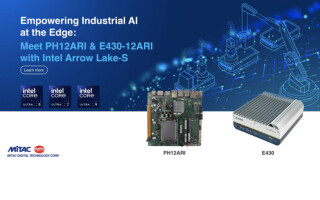
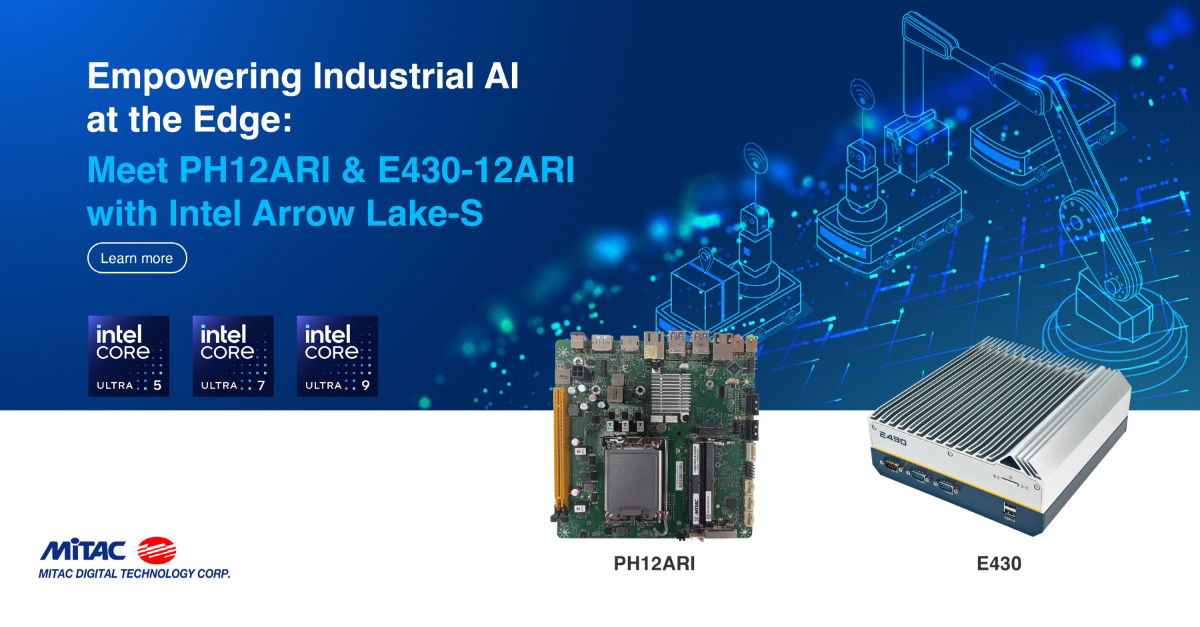
MiTAC’s embedded computers, such as the PH12ARI and E430-12ARI, are well-suited for industrial Edge AI applications due to their powerful processing capabilities, industrial-grade design, and long-term reliability. Both platforms are optimized for demanding AI workloads, including vision-based defect detection, barcode and OCR recognition, robotic guidance, and predictive maintenance through multi-sensor data fusion. Equipped with high-performance Intel® Arrow Lake-S processors and an integrated NPU AI accelerator, they enable real-time inferencing and advanced analytics at the Edge, reducing latency and enhancing operational efficiency.
Here are the specifics on the two platforms. First, the PH12ARI, which boasts high performance and can handle real-time Edge inferencing:
- Built to a thin Mini-ITX form factor
- Based on Intel’s Arrow Lake-S Gen 15 processor (up to 65 W) with an H810/Q870 chipset
- Integrated NPU up to 13.1 TOPs (int8)
- Supports Intel vPro technology
- Dual DDR5 SO-DIMM up to 96 Gbytes
- Supports three displays (HDMI, DisplayPort, and LVDS/eDP)
- Expansion includes one M.2 2280 M-key, one M.2 2230 E-key, one M.2 2242/3042/3052 B-Key, and one PCIe5.0 X16
- One Intel 2.5 Gigabit Ethernet and one Intel Gigabit Ethernet
And the E430-12ARI, which touts a compact fanless design that’s tailored for harsh industrial AI environments:
- Based on Intel’s Arrow Lake-S Gen 15 processor (up to 35 W) with a H810 chipset
- Supports dual displays (HDMI and DisplayPort)
- Expansion with one M.2 2280 M-key, one M.2 2230 E-key, and one M.2 B-Key
- Includes two USB3.2 Gen2, two USB3.2 Gen1, two USB2.0, two COM, and 8-bit GPIO
- Wide operating temperature support: -20°C to 50°C
- Space-saving fanless design with socket CPU support (209 by 209 by 87 mm)
MiTAC brings deep expertise in industrial design, delivering rugged systems that are built to withstand harsh environments, including wide operating temperatures, shock, and vibration. This makes the PH12ARI and E430-12ARI ideal for deployment on factory floors, in warehouses, or within autonomous systems. In addition, MiTAC ensures longevity support, allowing manufacturers to rely on consistent hardware availability and updates over extended product lifecycles, which is critical for stable industrial deployments.
As described above, you can see that these platforms also offer broad ecosystem compatibility, with expansion options, industrial I/O, and support for popular AI frameworks and software toolchains. This enables seamless integration into existing workflows and accelerates development for AI-enabled applications. Altogether, MiTAC’s Edge-ready platforms provide a future-proof foundation for intelligent, connected industrial systems.
Why MiTAC
If you’ve been in the embedded space for any amount of time, you’ve probably come across MiTAC, a vendor that’s built a reputation over the years as one of the most dependable names in industrial computing. MiTAC brings serious engineering muscle to the table, with decades of experience delivering rock-solid embedded platforms for everything from industrial automation to healthcare and retail.
What truly sets MiTAC apart is its engineering emphasis on long product lifecycles, full industrial compliance, and dependable deployment in thermally and mechanically demanding environments—key pillars of successful factory automation.
Add to that their global support infrastructure and history of getting it right the first time, and it’s clear why so many developers trust MiTAC as a go-to embedded partner. Contact the company today.