Avalue and Intel Solve Discriminative AI Challenge
December 02, 2025
Blog
What do the manufacturing, robotics, transportation, video, city safety, and security industries all have in common? They are searching for more efficiencies in the process of real-time object detection and dynamic tracking. The answer to that search could be discriminative AI for many companies.
Discriminative AI is all about proper classification and identifying anomalies in large datasets. To accomplish this, systems need AI-optimized edge computing for power, modular designs for flexibility, rugged form factors for reliability, and multi-channel processing for a variety of data inputs.
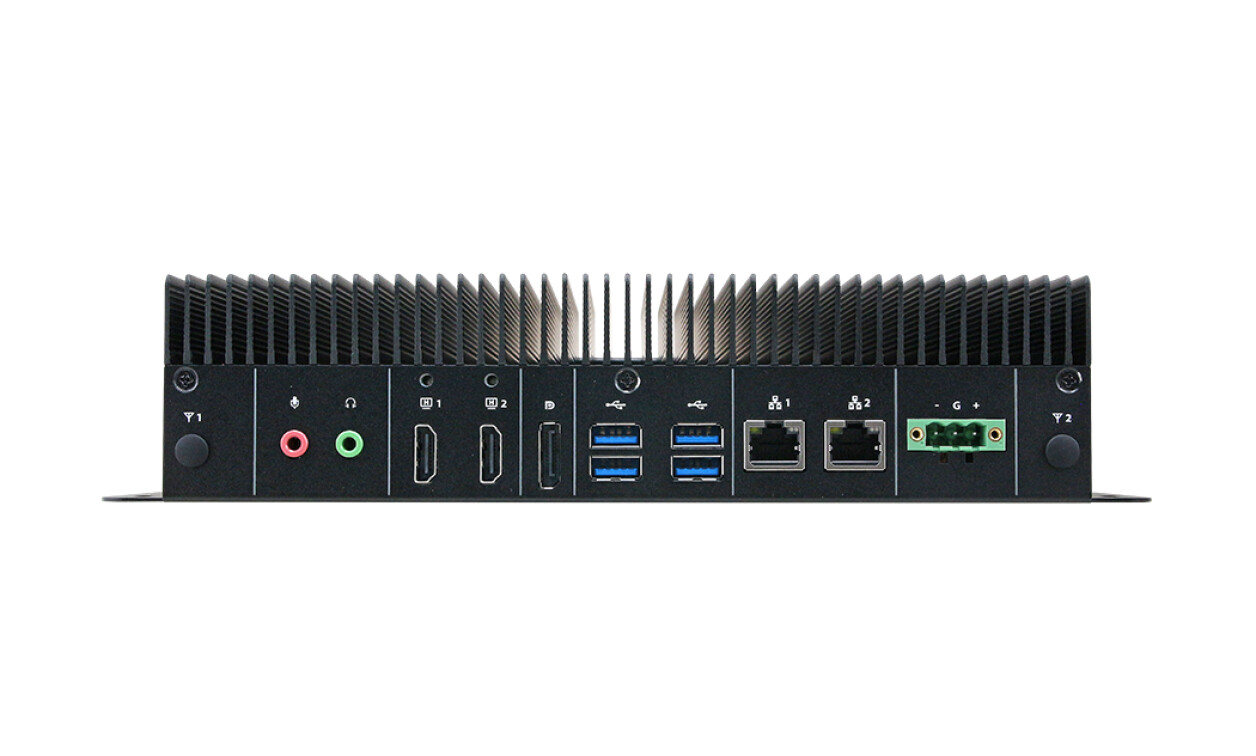
All of these features are available in the Avalue EMS-ARH, which offers AI-powered edge computing with up to 99 TOPS, thanks to the Intel Core Ultra process (Series 2) power plant. It is designed to meet all the above requirements and adds extended operational temperatures and shock resistance to make it even more rugged.
The EMS-ARH delivers exceptional processing power and optimized energy efficiency for seamless data handling and ultra-responsive performance in dynamic environments, Avalue says. It’s equipped with built-in Intel Arc graphics, Intel Xe Matrix Extensions, and an integrated NPU, to generate the 99 total platform TOPS of AI processing power.
Its advanced architecture is designed to accelerate real-time tactical analytics while maintaining power efficiency, making it an ideal solution for AI-driven edge applications.
For I/O connectivity, the EMS-ARH features two 2.5GbE RJ45 ports for high-speed networking. It also includes six USB ports (two USB 2.0, four USB 3.0), two HDMI, and one DisplayPort outputs to provide versatile interface options.
The system is flexible and supports expansion capabilities with up to 64GB DDR5 5600MHz memory, two M Key-M slots for storage, one M.2 Key-B slot for Wi-Fi 6E/BT 5.4, and optional LTE/5G support, ensuring robust wireless communication options in compact fanless designs.
The EMS-ARH is not alone in Avalue’s lineup, either. The companies' EMS-MTH, MAB-T600-B1, and BMX-P820 are all Intel-powered embedded computing powerhouses, ready for challenges in almost any industry or environment.
With the power and flexibility of a system like the Avalue EMS-ARH, you will find that your time to market is significantly shorter than you expect, and your results are much more consistent.
Intel’s AI Edge Initiative
This blog is part of a series outlining Intel’s AI Edge initiative. Intel recently unveiled its Intel AI Edge Systems, Edge AI Suites and Open Edge Platform. These are designed to help partners to integrate AI into existing infrastructure and help them to jumpstart development and to increase trust in their system performance and security.
Intel is working together with its software partners in the creation and optimization of AI for edge applications, as illustrated by this series of blog posts. Intel is working with its hardware platforms to specify AI Edge systems that allow for best-fit AI performance for key AI edge workloads and are available in a variety of power levels, sizes, and performance options.
To find out more, click here to visit Intel.

Ken Briodagh is a writer and editor with two decades of experience under his belt. He is in love with technology and if he had his druthers, he would beta test everything from shoe phones to flying cars.
At Embedded Computing Design, he covers, AI, Edge Computing, Data Centers, Automotive, Industrial, Smart City, IoT and IIoT, Semiconductors, Healthcare, and lots more. He hosts weekly programs on YouTube, including the technology unboxing feature DevKit Weekly, and his news show ICYMI, and, along with Tiera Oliver, hosts the Embedded Insiders and Embedded Executive podcasts.
In previous lives, he’s been a short order cook, telemarketer, medical supply technician, mover of the bodies at a funeral home, pirate, poet, partial alliterist, parent, partner and pretender to various thrones. Most of his exploits are either exaggerated or blatantly false.
Muck Rack: https://muckrack.com/ken-briodagh
Industry Moderator: https://www.microelectronicsus.com/speakers/ken-briodagh-1
Apple Podcasts: https://podcasts.apple.com/us/podcast/embedded-insiders/id1359230366
Spotify: https://open.spotify.com/show/5X07QpW7U2CM9ZbGxl4p40