HIDs Happily Ride the Coattails of Bluetooth® LE
June 23, 2025
Sponsored Blog
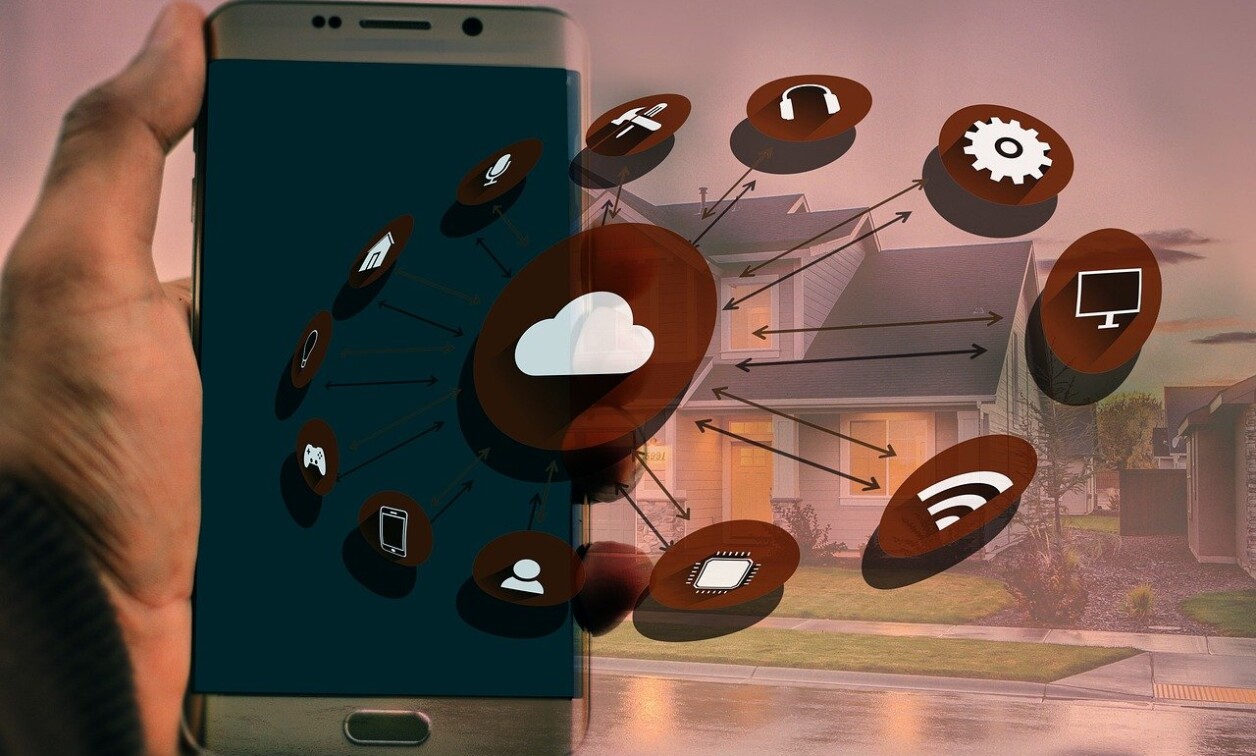
When I first began directly interacting with my devices, I felt a direct connection to the devices. After a while, they “understood” me, almost knowing what actions I would take before I took them. It’s that direct connection that today’s human interface devices (HIDs) actually provide. And it’s not just a “feeling” anymore. Now, it’s reality. The HIDs serve as a bridge between us and our digital world, turning our hands, gestures, and movements into something a computer can react to instantly.
As HIDs evolve, they become even more seamless, whether it's plugging in a new game controller, tapping on a thermostat’s touchscreen, or talking to my smartphone. Behind the scenes, the device knows exactly what to expect, thanks to the latest technology, particularly Bluetooth®. That means no fiddling with drivers or setup in most cases. It's that effortless interaction that makes HIDs such a powerful part of everyday tech.
Now that the Bluetooth® standard is so pervasive, that’s the medium that deployed in most HIDs. Overall, Bluetooth’s evolution has enabled smaller, smarter, and more power-efficient human interface devices that support richer user interactions across consumer, industrial, and medical applications.
Bluetooth® Low Energy (LE) specifically, which debuted in Bluetooth® Core 4.0, marks a new era for many devices, including HIDs. The target for Bluetooth® LE from Day 1 was low-power applications, enabling HIDs to operate for months or even years on a battery. This made it feasible to design compact, battery-efficient wearables and input devices.
Later updates, especially Bluetooth® Core 5.0 and beyond, brought improvements like increased range, higher data throughput, and better coexistence with other wireless technologies, allowing more stable HID connections in environments crowded with RF signals.
Bluetooth® LE Audio Ups the Ante
Most recently, Bluetooth® LE Audio, introduced in Bluetooth® Core 5.2, adds new capabilities for next-generation HIDs such as voice-enabled remote controls, hearing assistance devices, and hands-free headsets. It supports lower-latency audio transmission, higher quality, and new topologies like multicast audio—enhancing accessibility and user experience. Specifically, these features result from the introduction of isochronous (ISOC) channels, which allow for faster updates essentially between the HID device and computer.
HID developers are just starting to understand how they can innovate with the latest rev of Bluetooth®, with the latest advances in wireless performance, ergonomics, and multi-modal interaction. Some of the notable trends today’s developers are taking advantage of include:
- Multi-device and multi-platform support: Modern Bluetooth® input devices, like keyboards and mice, now support seamless switching between multiple devices—laptops, tablets, and phones—often with the press of a button. This is made possible by Bluetooth® LE's standardized HID profile and advancements in host-device pairing and memory.
- Ultra-low power consumption: Thanks to Bluetooth® LE, devices such as styluses, earbuds with gesture controls, and smart rings can now run for weeks or months on a single charge or coin cell battery. This supports the trend toward smaller, battery-efficient designs in wearables and portable input solutions.
- Touch, gesture, and voice integration: Innovations like gesture-sensitive trackpads, motion-based controllers, and voice-activated remotes use Bluetooth® to transmit rich, contextual input data. For example, remote controls with Bluetooth® and voice assistants can control TVs, smart homes, and more.
- Bluetooth® LE Audio for voice-enabled HIDs: The Bluetooth® LE Audio specification, particularly with an LC3 codec and multi-stream audio, enables input devices like wireless headsets and hearing aids to transmit higher-quality audio with lower latency. These improvements also support better synchronization and accessibility in voice-command-based input systems.
- Compact, wearable input devices: Rings, wristbands, and even glasses with integrated Bluetooth® HID functionality are now entering the market. These devices often combine motion sensing, touch surfaces, and haptics to allow intuitive control without traditional buttons or screens. Such devices are suited for AR/VR, industrial, or assistive applications.
- Programmable and context-aware inputs: Some Bluetooth® input devices now feature firmware and companion applications that allow for custom macros, profiles, and context-aware adjustments. For example, a gaming mouse might change its resolution or move around function keys based on the application in use, while a keyboard could switch layouts dynamically.
Now it should be very clear that Bluetooth® provides the best path to enable these cutting-edge HID applications. To that end, Infineon offers a device that can provide all the features described above. The company’s AIROC™ CYW20829 Bluetooth® LE MCU is a Bluetooth® LE 5.4 MCU with dual Arm Cortex M33 cores, and offers the industry’s best Bluetooth® range. Specifically, the CYW20829, part of the company’s AIROC family, boasts a 96-MHz core and 256 kbytes of SRAM to run application code and a 48-MHz core and 96 kbytes of SRAM to handle all the Bluetooth® protocols. And 32 programmable GPIO are available to the developer.
Note that Infineon’s CYW20829 is now verified as part of the Engineered for Intel® Evo™ laptop accessory program, the first of its kind in the Bluetooth® HID industry. This means that vendors developing next generation HID devices can confidently “ditch the dongle” by using CYW20829, gaining a best-in-class direct-to-host connection.
Putting all these specs together results in a solution that offers great noise immunity and range, with transmit power levels up to +10 dBm and a receive sensitivity of -106 dBm. The MCU integrates all the necessary levels of security through on-the-fly encryption, secure boot, and a crypto hardware engine. The input voltage supply can range from 1.7 to 3.6 V, and the operating temperature can run as high as 85°C.
With such a highly integrated device and just the right amount of memory, developers can future-proof their products and even open up new use cases thanks to Bluetooth® LE 5.4. And thanks to a robust ecosystem that includes Infineon’s ModusToolbox software, it’s easier than ever to get started.