Mouser Product of the Week: Analog Devices’ EVAL-LTC7899-AZ Evaluation Board
January 12, 2026
Sponsored Story
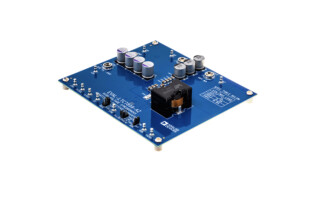
Engineers test, prototype, and evaluate high-voltage power solutions to ensure they operate safely and reliably in systems like automotive, military/avionics, industrial, telecommunications, and distributed power applications. An evaluation board is designed to support the engineer, corroborating that these systems behave efficiently and predictably in real-world conditions.
For systems like the LTC7899 Switching Regulator Controller from Analog Devices, the ready-to-use LTC7899-AZ Evaluation Board is designed to highlight the advanced features of the LTC7899 synchronous buck controller, such as high-efficiency, low-noise DC-DC conversion.

The LTC7899-AZ Evaluation Board in Action
The LTC7899 controller, included with the LTC7800-AZ eval board, supports a 140V low IQ, synchronous, negative input-to-positive output controller with programmable 5V to 10V gate drive.
The fully assembled and tested evaluation board is designed to support the performance and minimal electromagnetic interference (EMI) of the LTC7899 controller. The eval board is also designed with features like spread-spectrum frequency modulation and optimized gate drive circuitry that help reduce EMI emissions, and supports programmable switching frequencies from 100kHz to 1MHz.
The LTC7899-AZ evaluation board is designed to deliver a positive 48V output at a load current up to 8.8A from a -32V to -54V input supply, and programmed with a switching frequency of 150kHz for up to 97.3% peak efficiency. The evaluation circuit is designed with 120V FETs, allowing FETs of similar footprint to be substituted if needed for varying applications.
Getting Started with the LTC7899-AZ Evaluation Board
The Analog Devices LTC7899-AZ evaluation board also supports a robust protection suite, including protection mechanisms for overvoltage, undervoltage, and overcurrent, in addition to thermal shutdown and short-circuit protection.
The ready-to-use and ease of use are the main focus areas of the eval board design with test points for key signals, adjustable settings for output voltage, and documentation to support the quick configuration and validation of designs. The linked datasheet and user guide below also provide instructions, performance graphs, and layout recommendations.
Additional Resources:
- Product Page: https://www.mouser.com/new/analog-devices/adi-eval-ltc7899-az-evaluation-board/
- User Guide/Datasheet: https://www.mouser.com/pdfDocs/eval-ltc7899-az.pdf

Tiera Oliver is the assistant managing editor at Embedded Computing Design. She is responsible for web content editing, product news, and story development. She also manages, edits, and develops content for ECD podcasts, including Embedded Insiders.
She utilizes her expertise in journalism and content management to oversee editorial content, coordinate with editors, and ensure high-quality output across web, print, and multimedia platforms. She manages diverse projects, assists in the production of digital magazines, and hosts company podcasts by conducting in-depth interviews with industry leaders to deliver engaging and insightful discussions.
Tiera attended Northern Arizona University, where she received her bachelor's in journalism and political science. She was also a news reporter for the student-led newspaper, The Lumberjack.