
How Companion MCUs Optimize SoCs in Centralized Automotive Architectures
June 18, 2025
Sponsored Blog
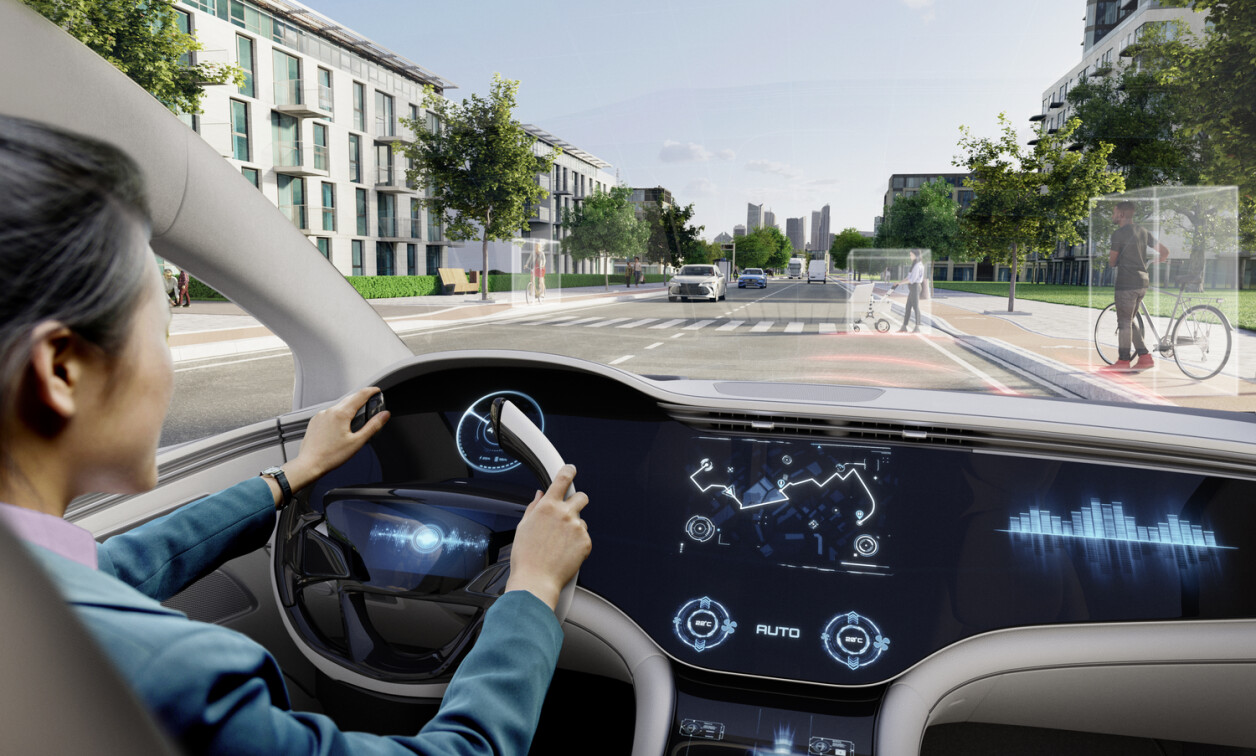
Centralized compute platforms are steadily replacing traditional domain-based E/E architectures in software-defined vehicles (SDVs). At the core of these platforms are high-performance system-on-chips (SoCs) that manage increasingly complex vehicle functions—from advanced driver-assistance systems (ADAS) to infotainment.
However, most SoCs aren’t designed for the real-time determinism, functional safety, or fault isolation SDVs require. To address these limitations, automotive manufacturers are integrating low-power companion microcontrollers (MCUs) alongside SoCs to independently manage safety-critical and time-sensitive operations.
This blog explores how companion MCUs optimize centralized compute architectures. It reviews placement strategies, core functions, and emerging use cases that support next-generation cockpit systems and real-time sensor-driven functionality.
Why Companion MCUs Are Essential in Centralized Architectures
Legacy E/E architectures relied on distributed electronic control units (ECUs), each with its own SoC, to manage ADAS, infotainment, and vehicle motion. In contrast, modern SDVs optimize coordination and compute efficiency by consolidating these functions into zonal controllers linked to centralized high-performance computers (HPCs).
Each HPC integrates a centralized SoC with CPU, GPU, and DSP cores to handle advanced workloads such as sensor fusion, high-resolution displays, and real-time voice processing. These SoCs typically run full-featured operating systems like Linux, Android Auto, or cloud-based platforms to support over-the-air (OTA) updates and immersive human-machine interfaces (HMIs). While scalable and flexible, these OSs aren’t optimized for deterministic execution, fault isolation, or ISO 26262 functional safety standards.
To address these gaps, low-power companion MCUs—often referred to as vehicle interconnect processors (VIPs) or digital control units (DCUs)—run a real-time operating system (RTOS) such as AUTOSAR. They boot before the SoC and shut down after it, enabling stable, predictable power cycles. Companion MCUs also function as secure communication gateways to in-vehicle networks such as CAN, LIN, or FlexRay™, and support ASIL B through ASIL D safety goals.
Placement Considerations
Selecting the optimal companion MCU configuration depends on how system functions are distributed across infotainment, instrument clusters, and in-vehicle networks (IVNs). Each implementation presents tradeoffs in complexity, safety coverage, and real-time performance.
One approach pairs a general-purpose SoC with a smaller secondary SoC. While the primary processor runs Android or Linux to support infotainment or cluster displays, a TRAVEO™ T2G-B MCU, certified to ASIL B and running an RTOS, manages IVN communication and security to ensure reliable system operation.
A second, widely implemented configuration uses a single SoC running multiple OS instances under a hypervisor. In this setup, a companion MCU—such as Infineon’s TRAVEO™ T2G-B—handles IVN connectivity and security, balancing real-time performance with operational safety.
In SoCs with integrated safety islands, certified lockstep cores and isolated memory run a separate RTOS to manage safety-critical tasks—such as cluster graphics—alongside Android-based IVI functions. Even in these designs, a companion MCU like the TRAVEO™ T2G series is essential to support peripherals, extend diagnostics, and improve overall system reliability.
In a fourth implementation, the TRAVEO™ T2G-C functions as a graphics-optimized MCU that operates alongside a single SoC to bolster real-time responsiveness in instrument clusters and maintain IVN performance.
Key Functions
Automotive companion MCUs handle certain critical tasks more efficiently than general-purpose SoCs. These include:
- System Management: Companion MCUs such as Infineon’s TRAVEO™ T2G family manage power sequencing and system startup, typically booting milliseconds before the SoC. They monitor voltage rails, thermal conditions, and initialization progress—and remain operational during thermal overloads and other fault events. Their RTOS and built-in analog-to-digital converters (ADCs) enable continuous health monitoring. TRAVEO™ T2G devices also manage lower-priority functions such as indicator chimes, display overlays, and analog stepper motor control.
- Safety Monitoring: MCUs perform plausibility checks and challenge-response tests to validate SoC behavior. By independently monitoring input and output signals, they can detect inconsistencies and improve reliability in fault conditions.
- Security Enforcement: Companion MCUs integrate or connect to hardware security modules (HSMs), performing cryptographic functions, authenticated boot, and secure lifecycle management. One-time programmable eFuses—available in the TRAVEO™ II family—prevent unauthorized reuse or modification.
- Communication Gateway: Functioning as intermediaries between SoCs and in-vehicle networks like CAN, LIN, or Ethernet, MCUs abstract and isolate network traffic—reducing processing overhead, protecting memory, and bolstering runtime stability and system security.
Enabling the Vehicle Cockpit of the Future
As centralized compute architectures advance, companion MCUs are increasingly used to improve responsiveness, reduce SoC overhead, and support safety-critical functions.
One example is the video safety companion (VSC) in digital instrument clusters. A companion MCU such as Infineon’s TRAVEO™ T2G-C supervises inter-processor communication, validates video streams, and applies safety overlays in real time—ensuring key indicators like vehicle speed remain visible even during system faults or SoC failures.
Companion MCUs also play a key role in ADAS, particularly within sensor fusion architectures where they manage localized safety logic and abstract data from high-bandwidth inputs such as radar, cameras, and LiDAR. This enables deterministic control and supports advanced driver-assistance features like real-time mapping, path planning, and automated parking.
Download the white paper to learn how Infineon’s TRAVEO™ T2G and T2G-C MCUs improve system integrity, graphics performance, and functional safety in SDVs.