
LDRA Develops Multi-Core Analysis Capabilities to Detect and Ease Timing Coupling Interference
November 13, 2025
News
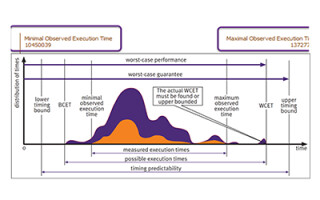
Wirral, United Kingdom. LDRA announced that its LDRA tool suite now supports enhanced analysis of timing coupling interference on multi-core architectures. Building on previous data coupling and control coupling tools, the new abilities present designers further insight into multi-core performance while allowing them to mitigate timing issues.
The LDRA tool suite supports both 32- and 64-bit instruction sets and addresses requirements traceability, coding standards compliance, and static and dynamic coverage analysis. The latest capabilities, when combined with LDRA’s data coupling and functional coupling tools, give engineers robust access and awareness into system behavior and operation.
According to the press release, the tool suite can recognize and quantify the effect of timing coupling interference to better aid developers when complying with worst-case execution time (WCET) requirements of multi-core guidelines such as AC-20-193.
“Hidden interference at the multi-core level can be significant,” said Ian Hennell, Operations Director, LDRA. “In a study we collaborated on with the United States Army DEVCOM Aviation & Missile Center Multi-Core Processing and Artificial Intelligence Laboratory, timing coupling interference resulted in up to a 40 percent increase in mean execution time. Now, armed with the ability to identify sources of timing coupling interference, their engineers can focus their development efforts where they will have maximum impact.”
Ideal applications include aerospace and defense, automotive, industrial controls, IoT, and space.
For more information, visit ldra.com.

Chad Cox is the Production Editor at Embedded Computing Design. His responsibilities are centered around content creation, writing and editing, and article research and development. Chad covers industry news and events and is known to interact with various industrial leaders via on-premise visits and online interviews. He is responsible for the digital footprint and dissemination of news via social media posts, advertising creation and the production of newsletters including the Embedded Computing Design’s Daily.
He is well versed in many facets of industrial computing including Edge AI, IoT, Processing, Security, Open Source, and more.
Chad graduated from the University of Cincinnati with a B.A. in Cultural and Analytical Literature and holds a master’s in education.